
By the middle of August, South Florida skin has absorbed four solid months of sun. Even with daily sunscreen, the result shows up as uneven tone, dullness, and dark patches that were not there in April. Treating hyperpigmentation in Pompano Beach is one of the most common reasons clients come to see us at the end of summer, and late summer is the right moment to start.
What Sun Exposure Actually Does to Your Skin
UV light pushes your melanocytes to produce extra melanin as a defense. When that production becomes uneven or concentrated, you get spots and patches instead of an even tone. At the same time, UV breaks down collagen and elastin. Therefore sun damage usually arrives as a package: dark spots, rough texture, fine lines, and enlarged pores all at once. Because the damage accumulates below the surface, it often appears months after the exposure that caused it.
The Three Kinds of Dark Spots We See Most
- Sun spots: Flat brown spots on the face, chest, shoulders, and hands, caused by cumulative UV exposure over years.
- Melasma: Larger, blotchy patches across the cheeks, forehead, and upper lip, driven by hormones and worsened by heat and sun. Florida humidity makes it stubborn.
- Post-inflammatory marks: The discoloration left behind after a breakout or irritation. Sun exposure darkens these marks and slows their fading.
Identifying which type you have matters, because they do not all respond to the same treatment. Melasma in particular can worsen with aggressive heat-based approaches, so it calls for a gentler plan.
Treatments That Fade Sun Damage
We build every plan around your own pattern of pigment. These are the tools we reach for most often:
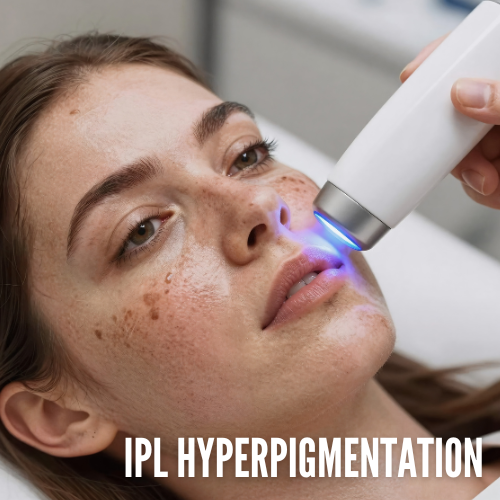
- IPL photofacial: Light targets concentrated pigment and breaks it up so your skin can clear it away. It works best on true sun spots.
- Microneedling: Stimulates collagen and speeds cell turnover, which helps texture and post-inflammatory marks together.
- Dermaplaning: Removes the dull surface layer so brightening products actually reach living skin.
- Custom facials: Built around brightening actives and gentle exfoliation, with hydration to rebuild the barrier summer stripped away.
Start With an Honest Look at Your Skin
Before recommending anything, we run an AI skin analysis. It reveals pigment sitting below the surface rather than only what shows in the mirror, and it sets a baseline so you can measure real progress across a treatment series.
Why Late Summer Is the Right Time to Begin
Pigment-focused treatments work best when sun exposure is winding down. Consequently, starting now means your series finishes as Florida moves into cooler, lower-UV months, giving the results room to hold. Beginning in June means fighting fresh UV the entire way through.
Protecting What You Get Back
None of this lasts without daily protection. Use a broad-spectrum SPF 30 or higher, reapply every two hours outdoors, and add a hat and shade during peak hours. The American Academy of Dermatology also recommends tinted sunscreen containing iron oxide for pigment-prone skin, because visible light contributes to melasma as well.
Book Your Consultation in Pompano Beach
Summer does not have to leave a permanent mark. Browse our full menu of spa services, then contact our Pompano Beach studio to schedule your consultation. We will identify what kind of pigment you are dealing with and build a plan to clear it.